Diagnosis
COMMUNICATION MAPPING:
KEY FINDINGS
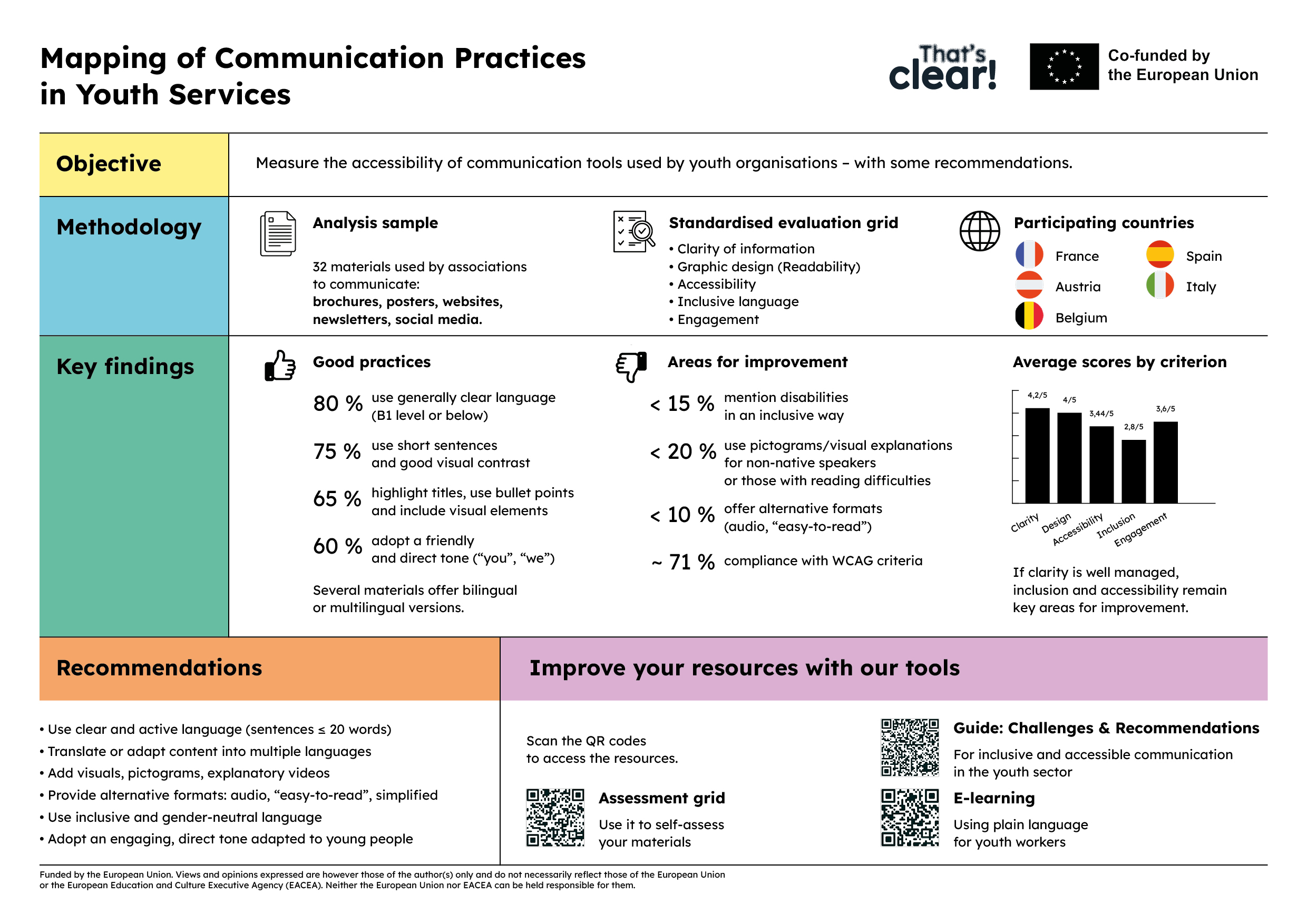
This infographic summarises the results of a European mapping of communication practices in youth services. Based on the analysis of 32 materials and a standardised evaluation grid, it examines how information is designed and shared with young people, providing a data-driven diagnosis of current practices.
While most materials use clear language and structured content, the results show that accessibility and inclusion remain key challenges, with limited use of visual supports, alternative formats or inclusive references. The infographic highlights both good practices and areas for improvement, which have directly informed the development of the guide presented below, offering practical insights to support more accessible and inclusive communication.
CHALLENGES &
RECOMMENDATIONS
GUIDE
Inclusive and accessible
communication in the youth sector
This guide on clear and inclusive communication in the youth sector is a key output of the ‘That’s Clear!’ project.
Its purpose is to identify the communication challenges faced by marginalised youth, such as those with cognitive disabilities, limited literacy, or linguistic barriers, when accessing youth services.
The guide was developed through a participatory and research-based process. It brings together findings from:
• A mapping of communication practices currently used in youth services across partner countries,
• A series of co-diagnostic workshops involving youth workers and marginalised young people, aimed at identifying obstacles and co-creating inclusive communication strategies.
By combining this evidence and direct feedback from young people and professionals, the guide offers:
• A clear overview of communication barriers affecting marginalised youth
• A synthesis of inclusive strategies and tools currently in use or needed
• A set of practical, actionable recommendations for improving communication accessibility in youth services.
This publication is intended for youth workers, educators, youth organisations and public institutions seeking to make their services more inclusive.